Wildfire Home-Hardening Checklist (2026)
The complete canonical checklist for wildfire-hardening your home. Structural upgrades, defensible space zones, and every action you need to strengthen your home's resilience.
View the checklist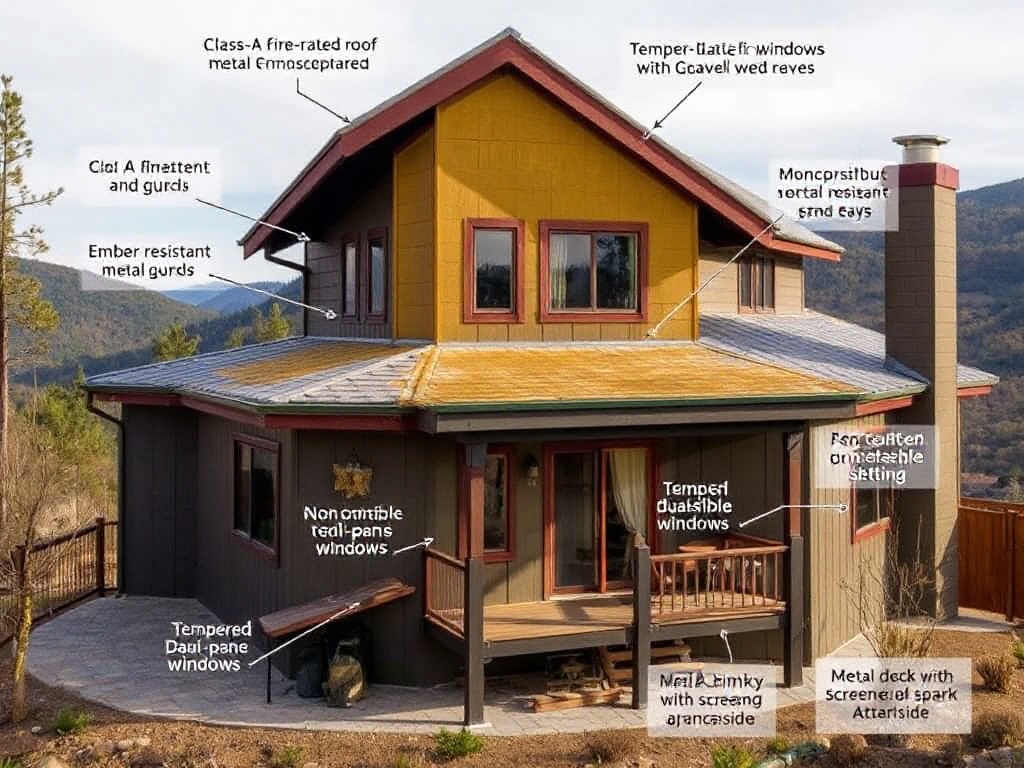
Home Structural Hardening Checklist
Class-A Fire-Rated Roof
Replace with Class-A rated materials: architectural asphalt shingles, clay tiles, slate, or metal roofing. Avoid wood shakes and lower-rated materials.
Why: Roofs are the primary point of ember ignition. Class-A rating ensures your roof won't spread flame.
Clean Gutters + Metal Guards
Keep gutters clear of leaves and debris. Install metal gutter guards to prevent debris and ember accumulation.
Why: Debris in gutters is a fire fuel. Guards reduce maintenance and prevent ember ignition.
Ember-Resistant Vents (1/16"–1/8" mesh)
Replace all roof, foundation, and attic vents with ember-resistant versions using noncombustible metal mesh (1/16–1/8 inch) to block flying embers.
Why: Vents are a major ignition vector. Embers lodge in standard vents and ignite interior framing.
Enclosed Eaves & Soffits
Box in or fully enclose eaves and soffits to prevent embers from entering the attic. Ensure any vents in enclosed eaves are ember-resistant.
Why: Open eaves are a direct pathway for embers to enter the attic and ignite wood framing.
Dual-Pane Windows with Tempered Pane
Install dual-pane windows with at least one tempered pane (typically the outer pane). Tempered glass resists heat and won't shatter as easily.
Why: Single-pane windows crack in heat, allowing embers to enter. Tempered glass provides better fire resistance.
Noncombustible Siding with 6" Noncombustible Base
Use noncombustible siding: metal, fiber-cement, brick, or stone. Ensure a 6-inch noncombustible base where siding meets ground or deck (no wood trim).
Why: Wood siding ignites easily. Noncombustible materials with a raised base prevent ground-level fire spread.
Solid/Fire-Rated Doors
Replace hollow-core doors with solid-core or fire-rated doors. Hollow-core doors offer poor fire resistance and burn easily.
Why: Doors are a critical entry point for heat and embers. Solid doors provide much better protection.
Noncombustible Deck with Screened Underside
Build with noncombustible materials (composite, metal, concrete) or fire-rated wood. Critically, screen the underside with 1/8-inch metal mesh to prevent embers from settling underneath.
Why: Decks are a major ignition point. The screened underside is essential to prevent ember accumulation.
Chimney Spark Arrester
Install a spark arrester on your chimney to prevent embers from exiting. Clean regularly to maintain proper airflow.
Why: Chimneys can be a direct source of embers landing on your roof or nearby vegetation.
Defensible Space Checklist
Zone 0: 0–5 Feet (Noncombustible)
Zone 0 must be completely noncombustible to prevent ground-level fire spread to your home.
Zone 1: 5–30 Feet (Thinned Trees & Vegetation)
Zone 1 reduces fuel load and slows fire spread toward your home.
Zone 2: 30–100 Feet (Selective Reduction)
Zone 2 is broader selective thinning to slow fire spread from the surrounding landscape.
Frequently Asked Questions
Common questions about home-hardening and defensible space
Standards & Best Practices: This checklist reflects current best practices from NFPA, Firewise USA, and state forestry agencies as of June 2026. Standards and specific requirements may vary by state, county, and insurer. Always verify local building codes and requirements before starting work.
For authoritative guidance, consult:
- • NFPA Wildfire Information
- • Firewise USA
- • Your local fire department or county extension office